
Tomkins
Island
In an era of accelerating coastal erosion, sea-level rise, and habitat loss, Tomkins highlights the growing importance of island building.
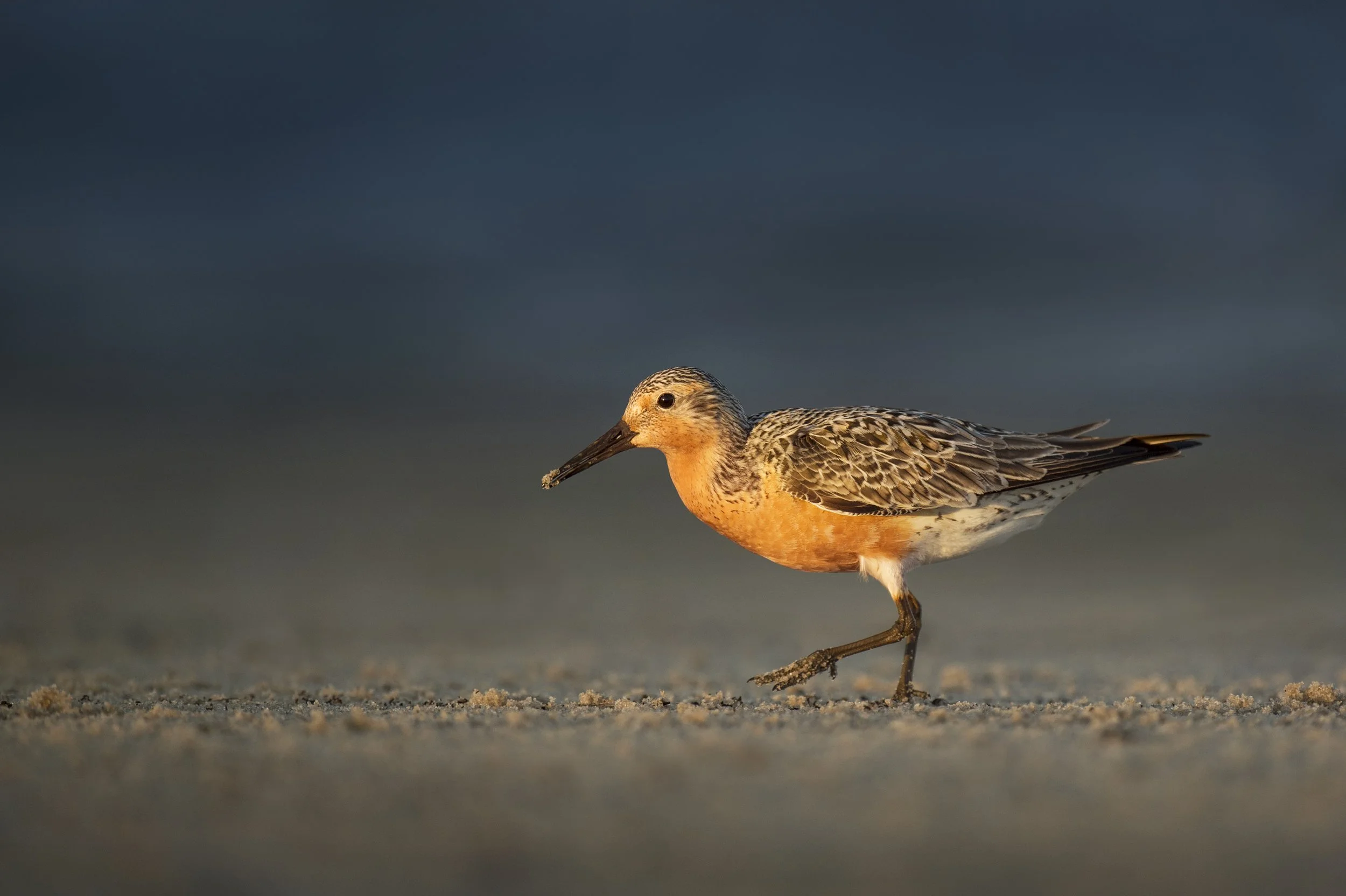
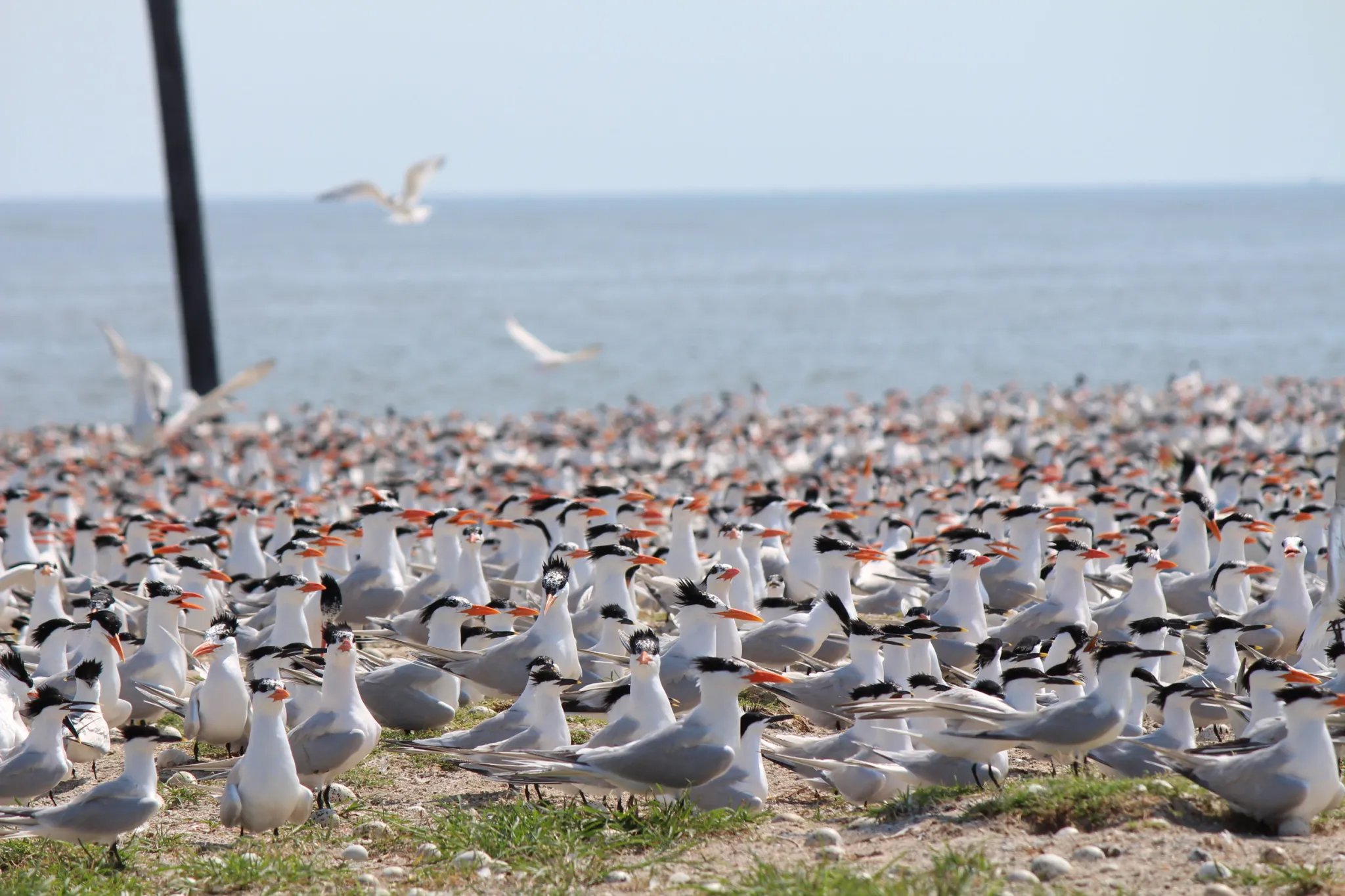
Brown Pelicans • Double- crested Cormorants • Wilson’s Plovers • Semi-palmated Plovers • American Oystercatchers • Sanderlings • Ruddy Turnstones • Red Knots • Laughing Gulls • Ring-billed Gulls • Herring Gulls • Lesser Black-backed Gull • Royal Terns • Forster’s Terns • Sandwich Terns • Common Terns • Black Skimmers
Brown Pelicans • Double- crested Cormorants • Wilson’s Plovers • Semi-palmated Plovers • American Oystercatchers • Sanderlings • Ruddy Turnstones • Red Knots • Laughing Gulls • Ring-billed Gulls • Herring Gulls • Lesser Black-backed Gull • Royal Terns • Forster’s Terns • Sandwich Terns • Common Terns • Black Skimmers
⛶ Joel Caldwell
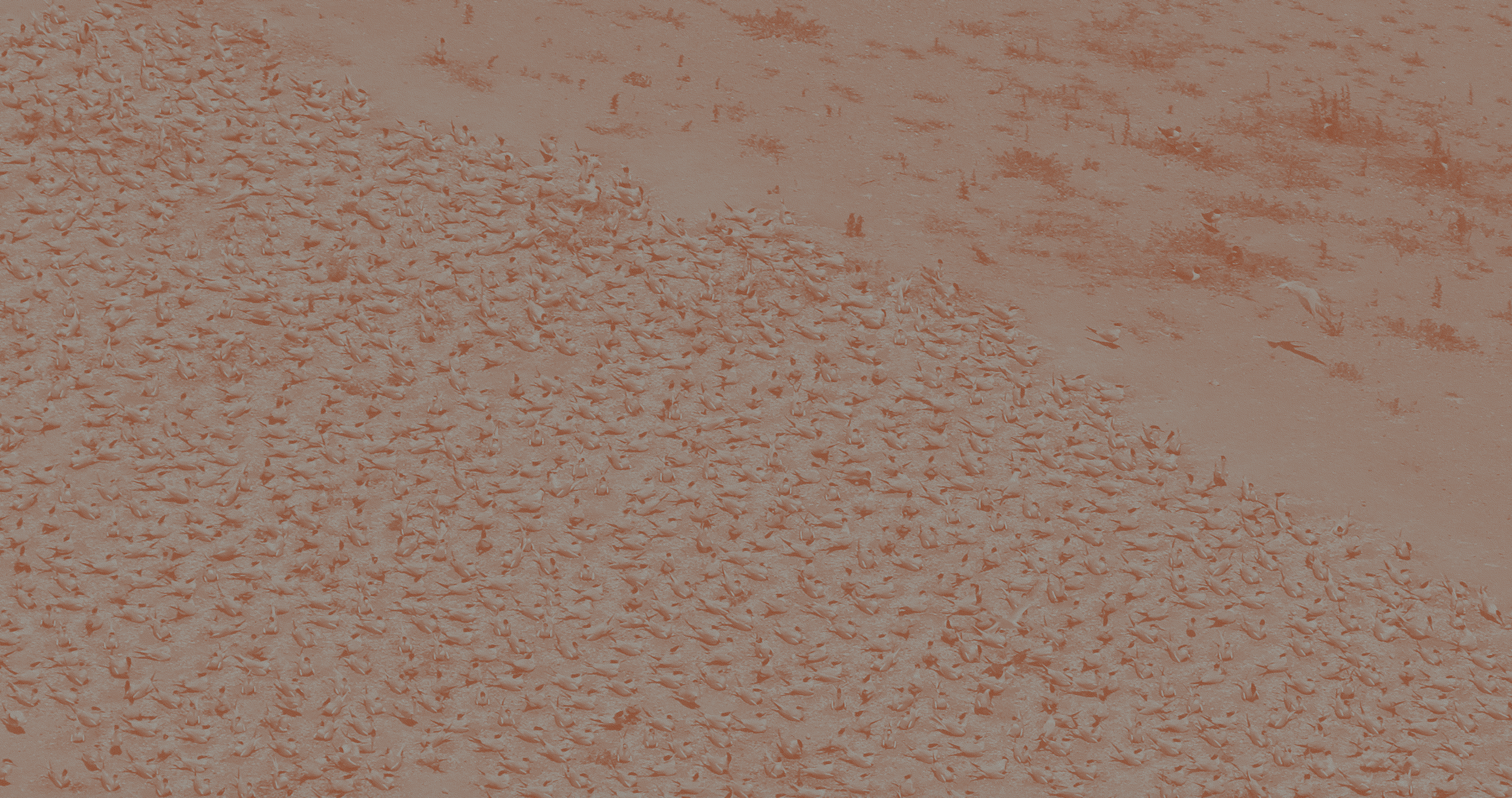
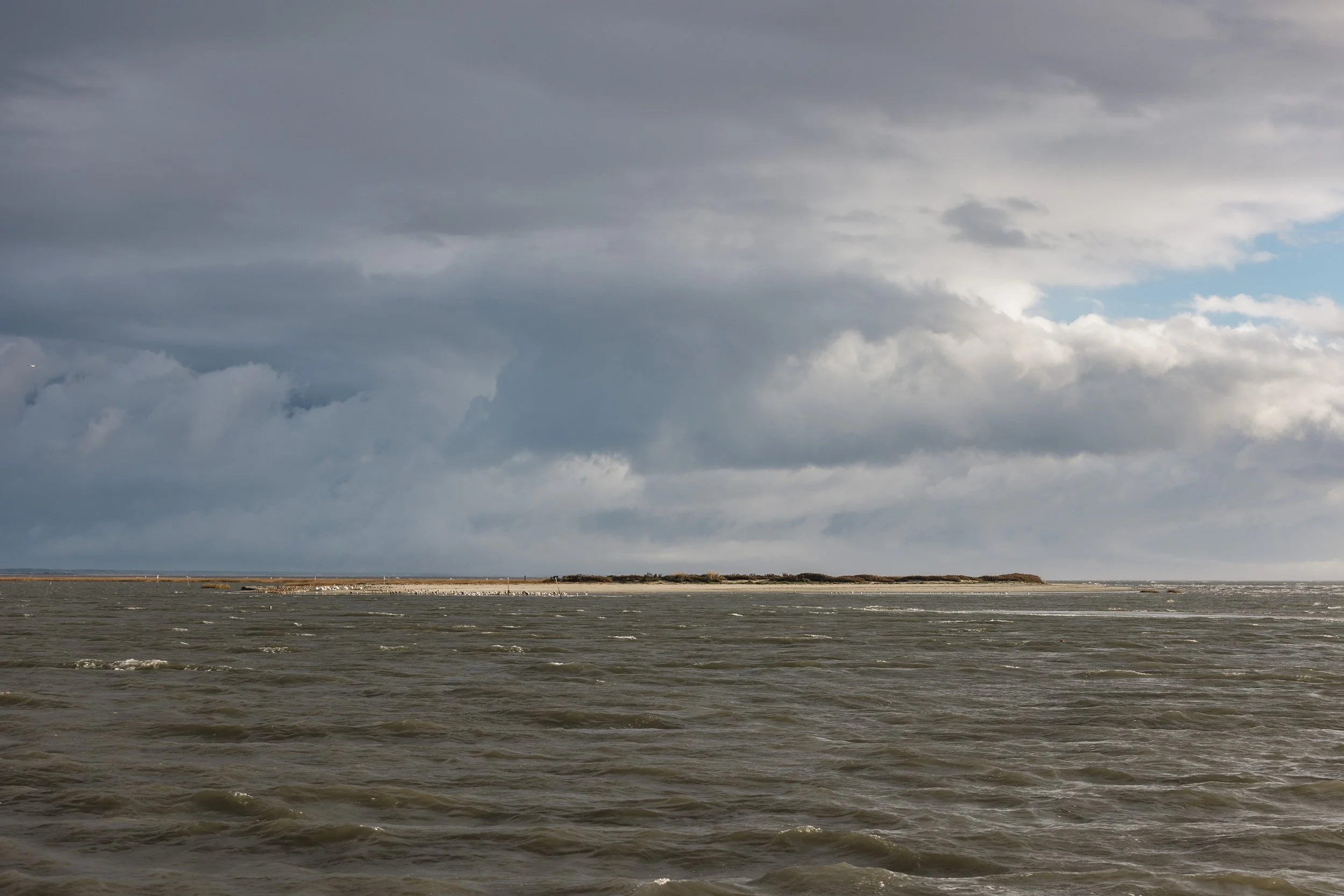
Tomkins Island is a protected seabird sanctuary, at the mouth of the Savannah River, at the border between South Carolina and Georgia. Closed year-round, the island serves as part of a broader network of coastal habitats critical to nesting and migratory bird populations.
Although smaller and less publicly known than some of the region’s other sanctuaries, Tomkins Island plays an important ecological role within the Lowcountry’s interconnected estuarine system. The island’s restricted access and protected status help preserve habitat for sensitive seabirds and shorebirds vulnerable to human disturbance and coastal habitat loss.

Tomkins Island stands out, in particular, as a powerful example of ecological restoration and “rewilding” through intentional island creation and habitat management. Constructed in 2005 as part of mitigation efforts tied to the continued dredging of Savannah Harbor, the island demonstrates how engineered landscapes can be transformed into thriving sanctuaries for seabirds and shorebirds. Since becoming a Seabird Sanctuary in 2015, Tomkins Island has evolved into critical nesting habitat, carefully maintained through a cooperative partnership between the U.S. Army Corps of Engineers – Savannah District and the South Carolina Department of Natural Resources (SCDNR). Ongoing restoration efforts, including rebuilding sand and rock structures, controlling vegetation, and monitoring bird populations, help sustain the dynamic coastal conditions many colonial nesting species require to survive.
𖦏 32.989828, -79.551517No dogs are allowed.
No person may enter any area of the preserve designated as a nesting area for birds.
March 15—October 15 the area is closed to all access including the intertidal zone between low and high tide waterlines.
Octber 16—March 14 access is allowed only in the intertidal zone between low and high tide waterlines.
With brown pelicans nesting again on Crab Bank Seabird Sanctuary, SCDNR will extend the closure of the eastern end of Crab Bank beyond the standard reopening date of October 15 to protect vulnerable chicks. Beginning October 16, the western end of the island (intertidal zone only) will reopen for public access, while the eastern end will remain closed through November 15th. Closure boundaries will be marked with signs and buoys, visible at any tide.
No motorized vehicles, bicycles or horses.
Articles and Resources
-
Sneak Peek of a Seabird Paradise
06.20.2017 • SCDNR
Tomkins Island was built for the birds...