
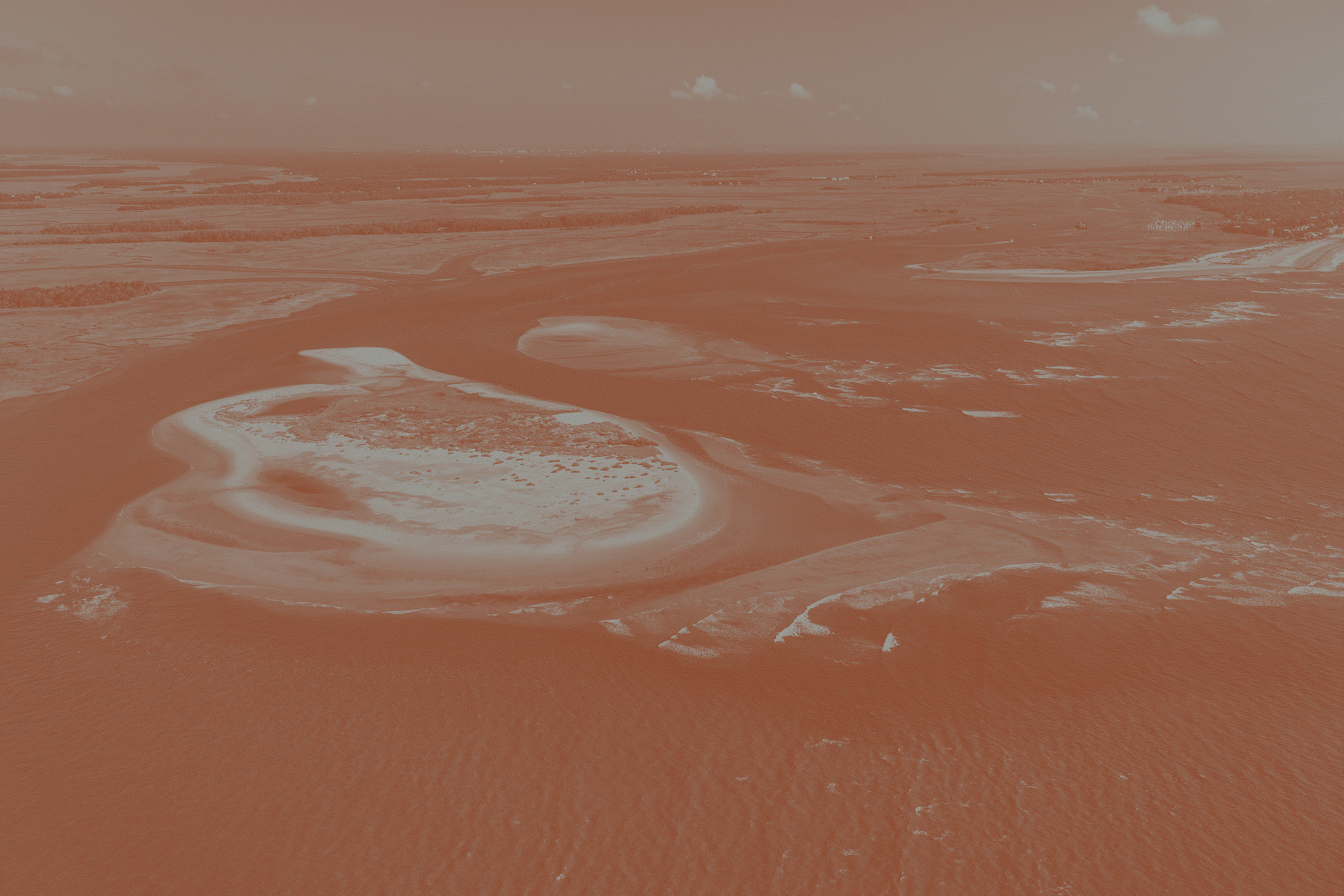
Bird Key
Stono Seabird Sanctuary
Bird Key has experienced significant habitat fluctuations over time, including recent re-nourishment projects connected to the Folly Beach dredging program.
Brown Pelicans •
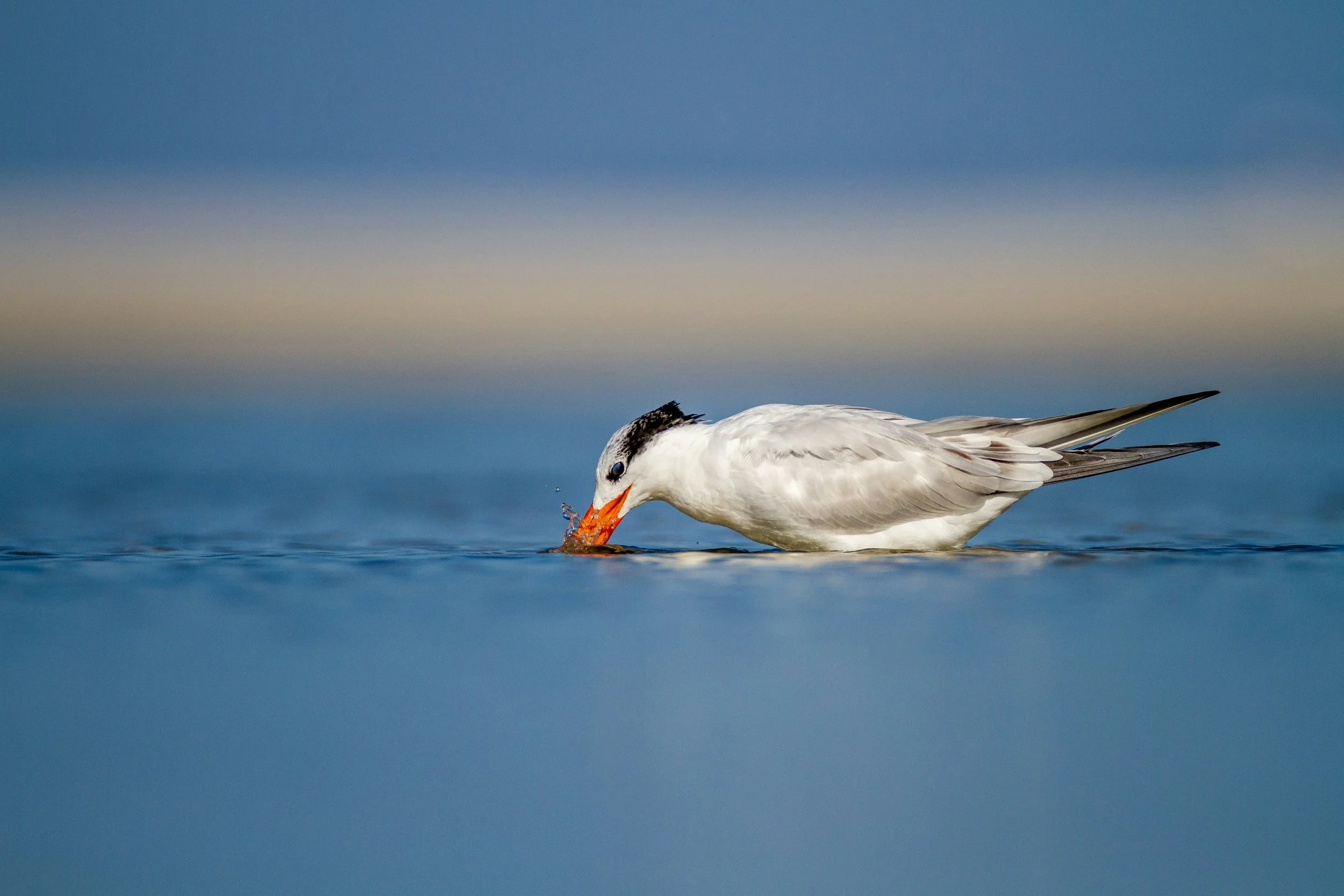
Royal Terns •
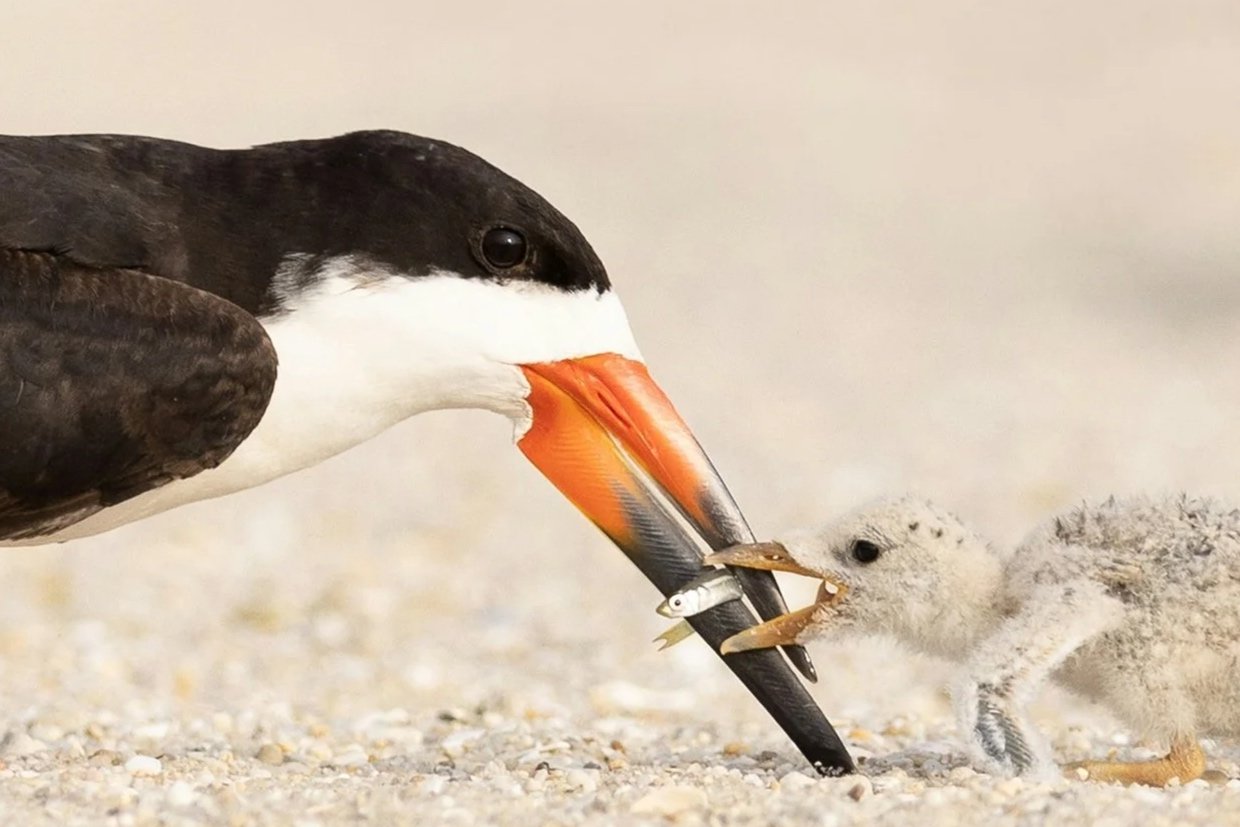
Black Skimmers •
Least Terns •
American Oystercatchers •
Snowy Egrets •
Laughing Gulls •
Brown Pelicans • Royal Terns • Black Skimmers • Least Terns • American Oystercatchers • Snowy Egrets • Laughing Gulls •
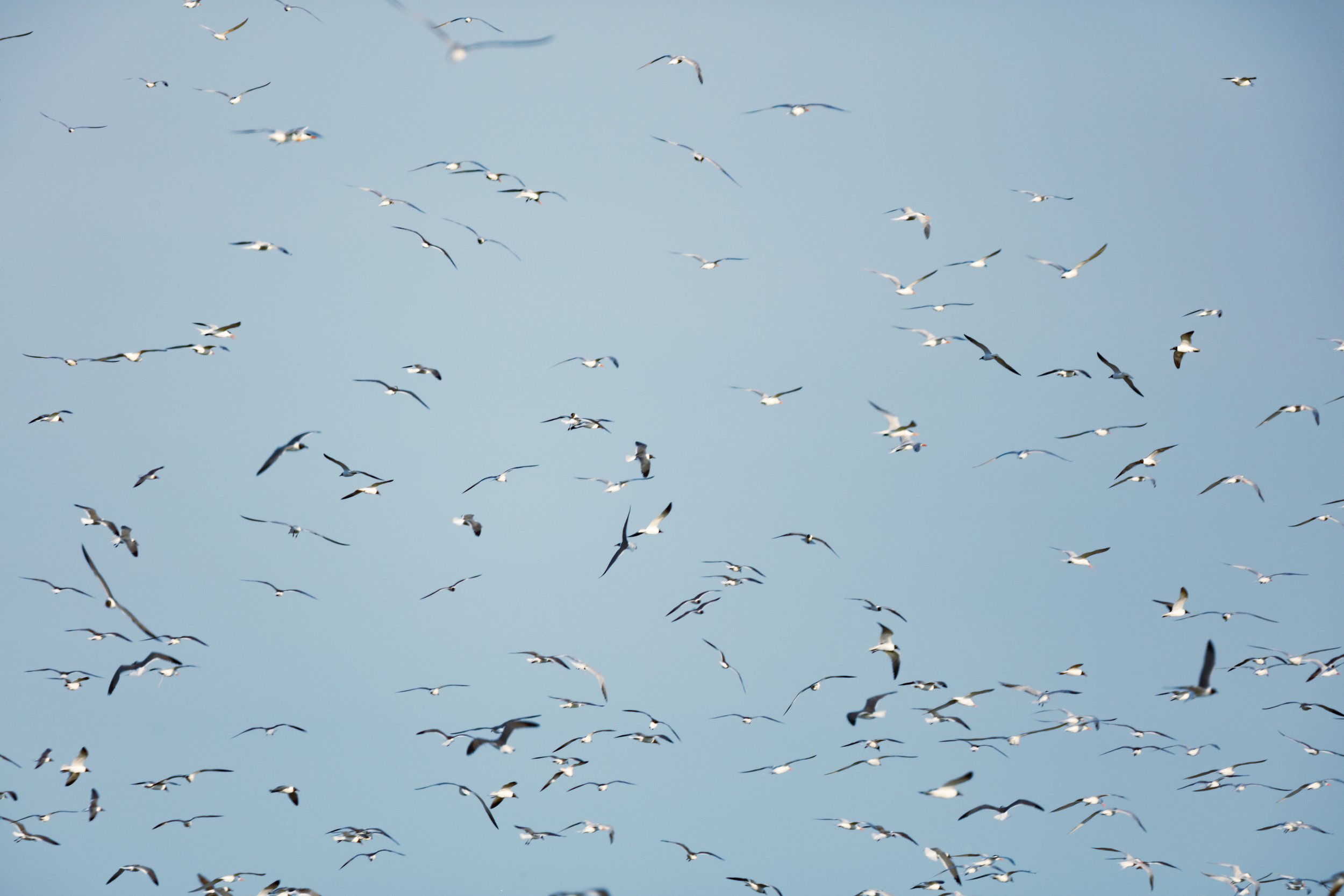
Located at the mouth of the Stono Inlet between Folly, Kiawah, and Johns Islands, Bird Key–Stono is a dynamic seabird sanctuary that reflects the shifting sands and abundance of life that defines the South Carolina coast.
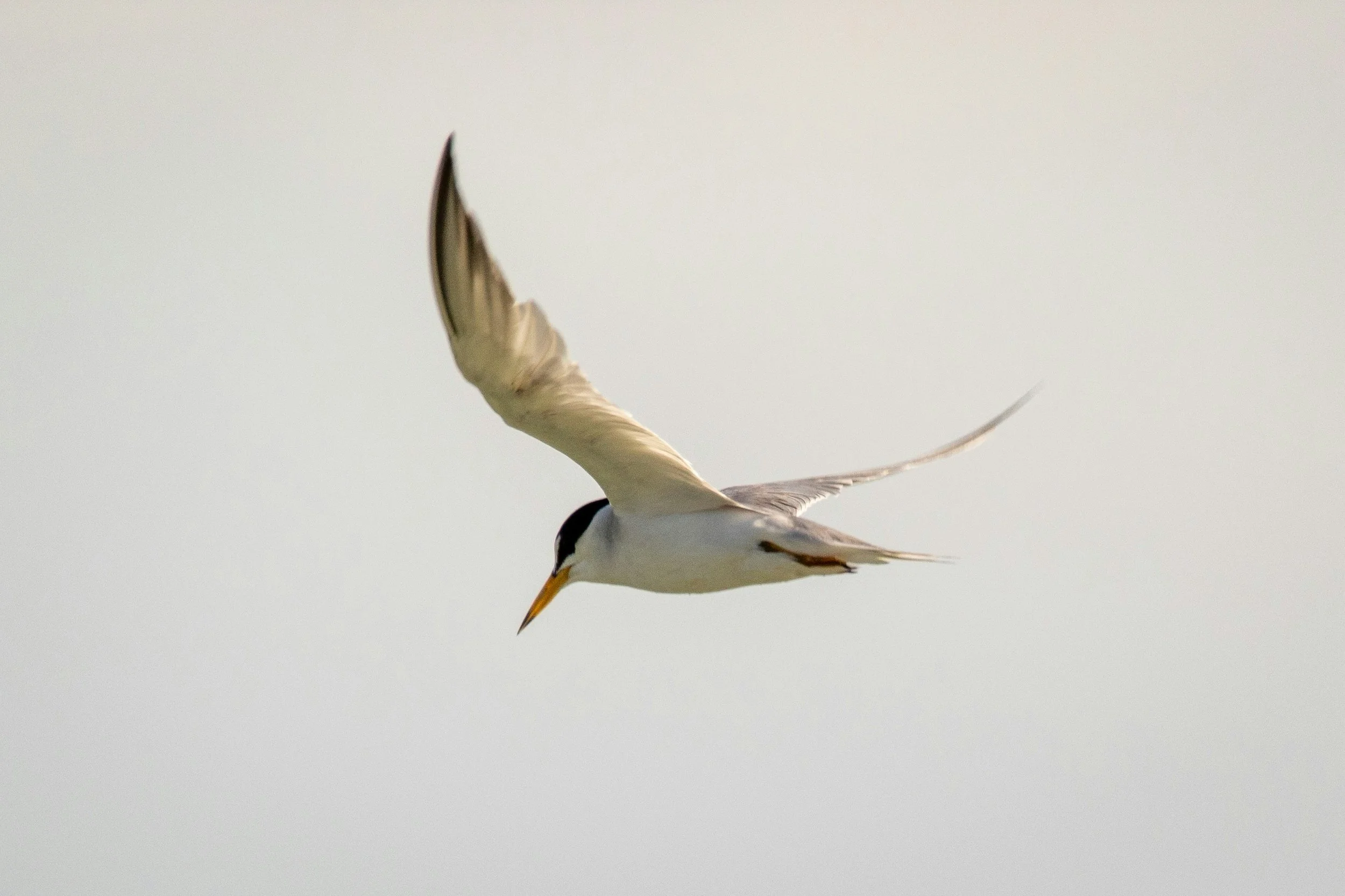
Stewarded by the South Carolina Department of Natural Resources (SCDNR), Bird Key-Stono is approximately a 35-acre island, which provides critical nesting and resting habitat for colonial seabirds and shorebirds, including brown pelicans, royal terns, black skimmers, least terns, and American oystercatchers, among others depending on the season and year. Its isolated setting and absence of mammalian predators make it one of the Lowcountry’s most important seasonal bird habitats.

As part of our Bird Island Research, Bird Key–Stono serves as a living example of how coastal landscapes are constantly reshaped by erosion, storms, sediment movement, and restoration efforts. The island has experienced significant habitat fluctuations over time, including recent renourishment projects connected to the Folly Beach dredging program. Through historical research, ecological storytelling, photography, and field documentation, this project will explore how Bird Key–Stono reveals the interconnected relationship between bird habitat, coastal engineering, and community stewardship for communities living on both sides of the Stono River and surrounding environs.
𖦏 32.627947, -79.986239SCDNR PROTECTIONS:
No dogs are allowed.
No person may enter any area of the preserve designated as a nesting area for birds.
March 15—October 15 the area is closed to all access including the intertidal zone between low and high tide waterlines.
October 16—March 14 access is allowed only in the intertidal zone between low and high tide waterlines. No motorized vehicles, bicycles or horses.
Articles and Resources
-
Renourishment of Bird Key Has Shorebirds Rejoicing
06.01.2024 • Dylan Burnell
Shorebirds circled overhead while the dredge pumped sand onto an island off Folly Beach… -
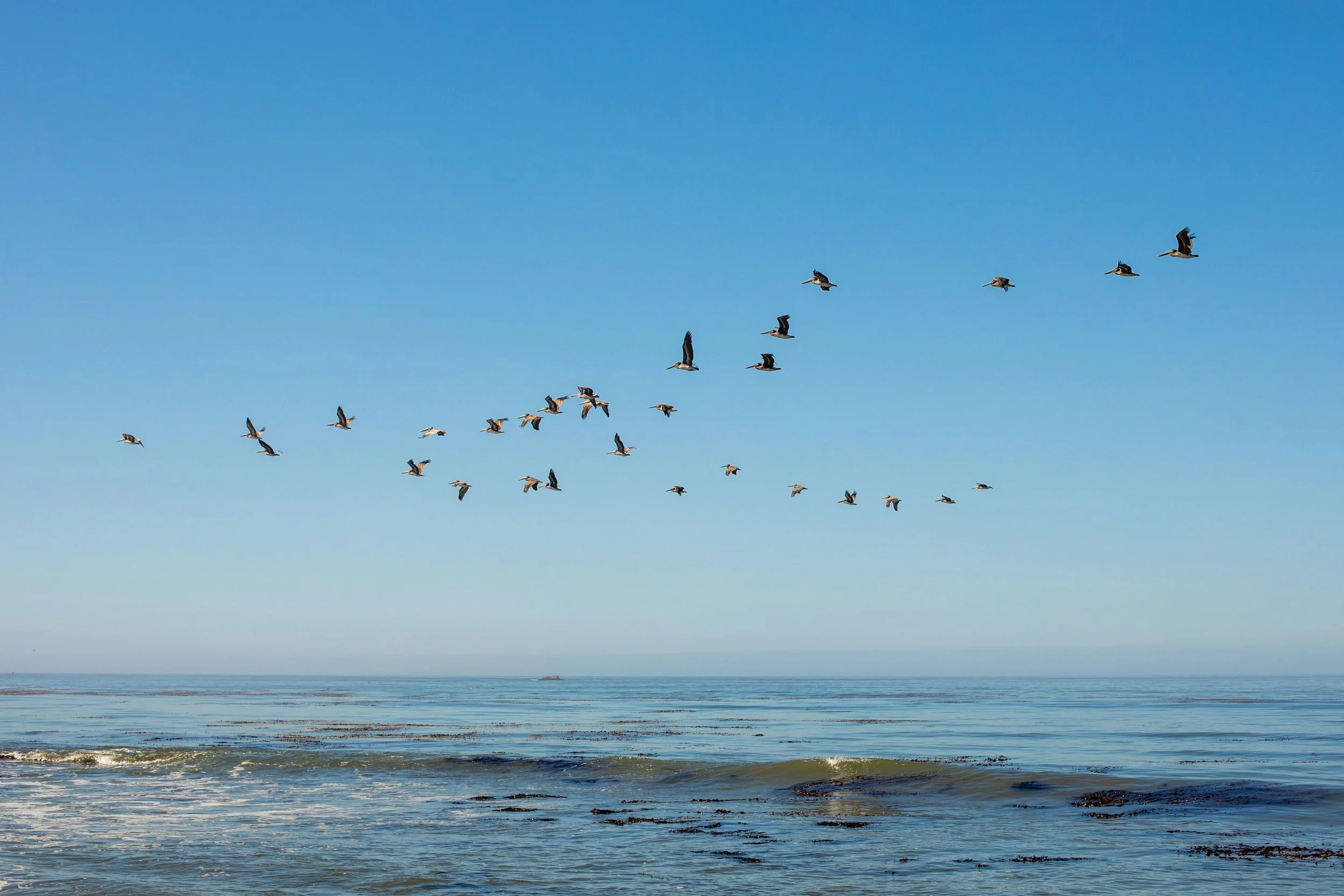
Bird Key and the Folly Beach Air Force
05.2023 • Folly Beach Civic Club
H5246…introduced by Spencer Wetmore, officially declared the eastern brown pelican as the state seabird of South Carolina.
-
-
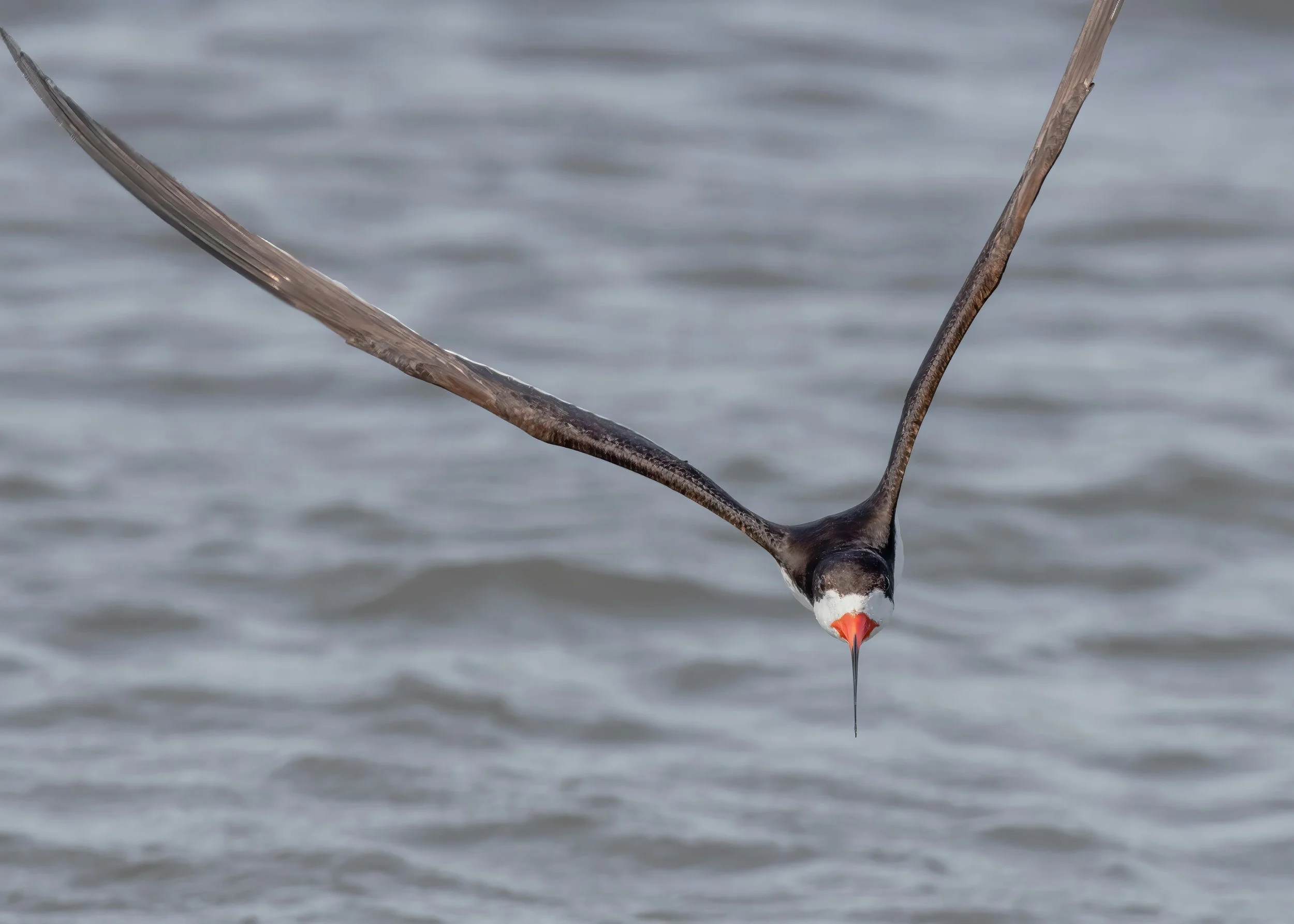
Restoring Seabird Nesting on Bird Key
09.30.2008 • SCDNR
122 royal tern, 52 black skimmer, and 32 least tern decoys wereordered unpainted and shipped to Huntington State Park…
Historical Maps
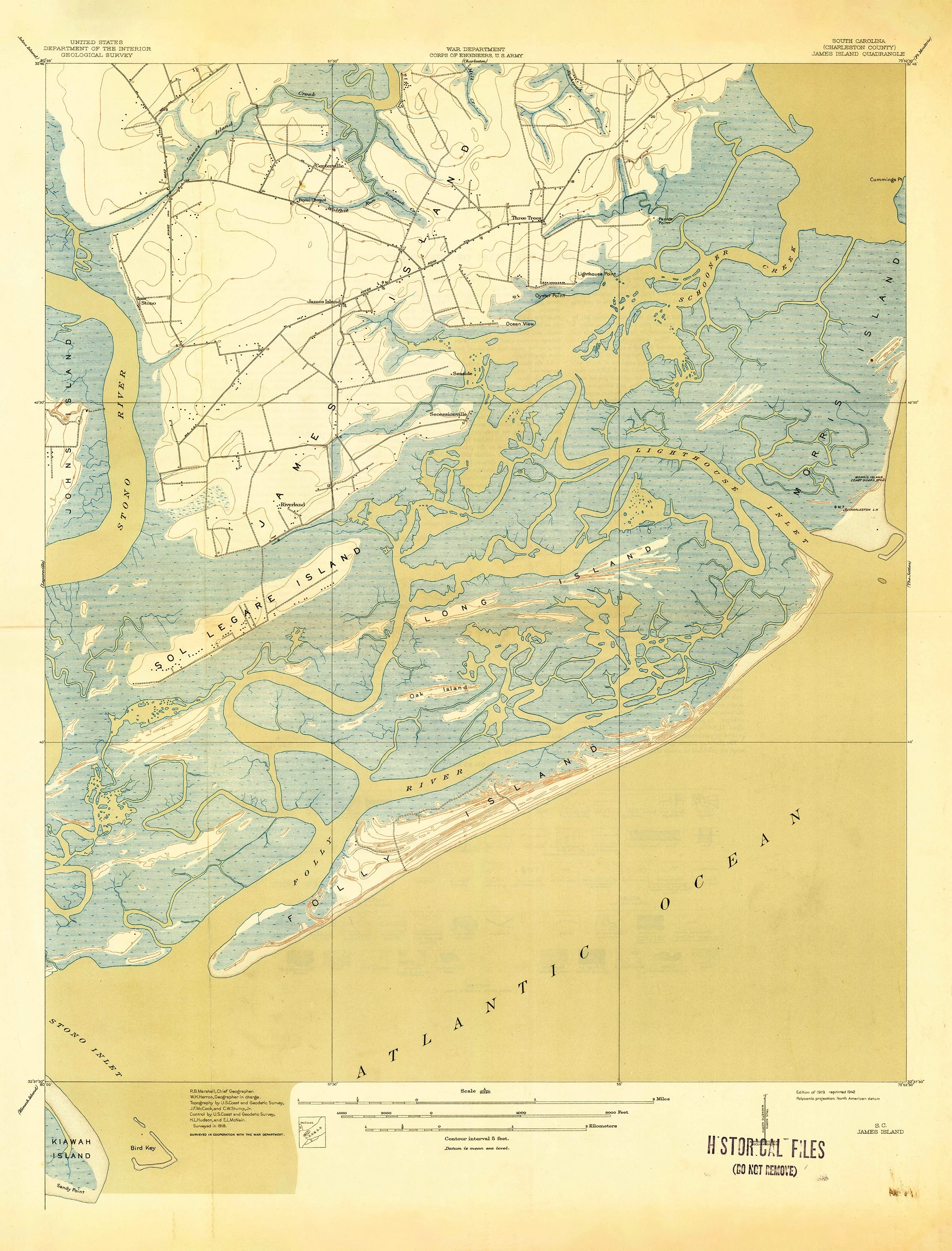
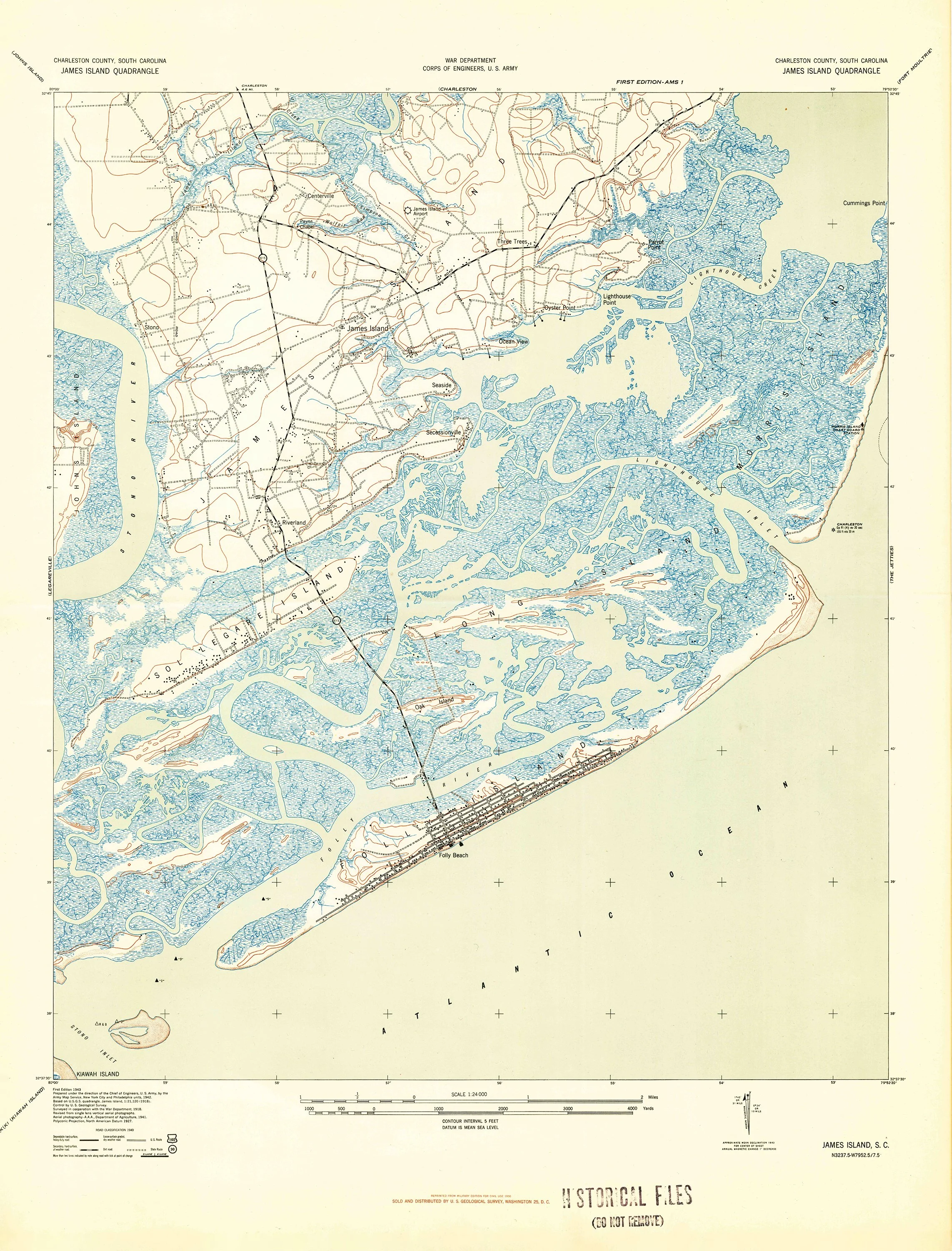
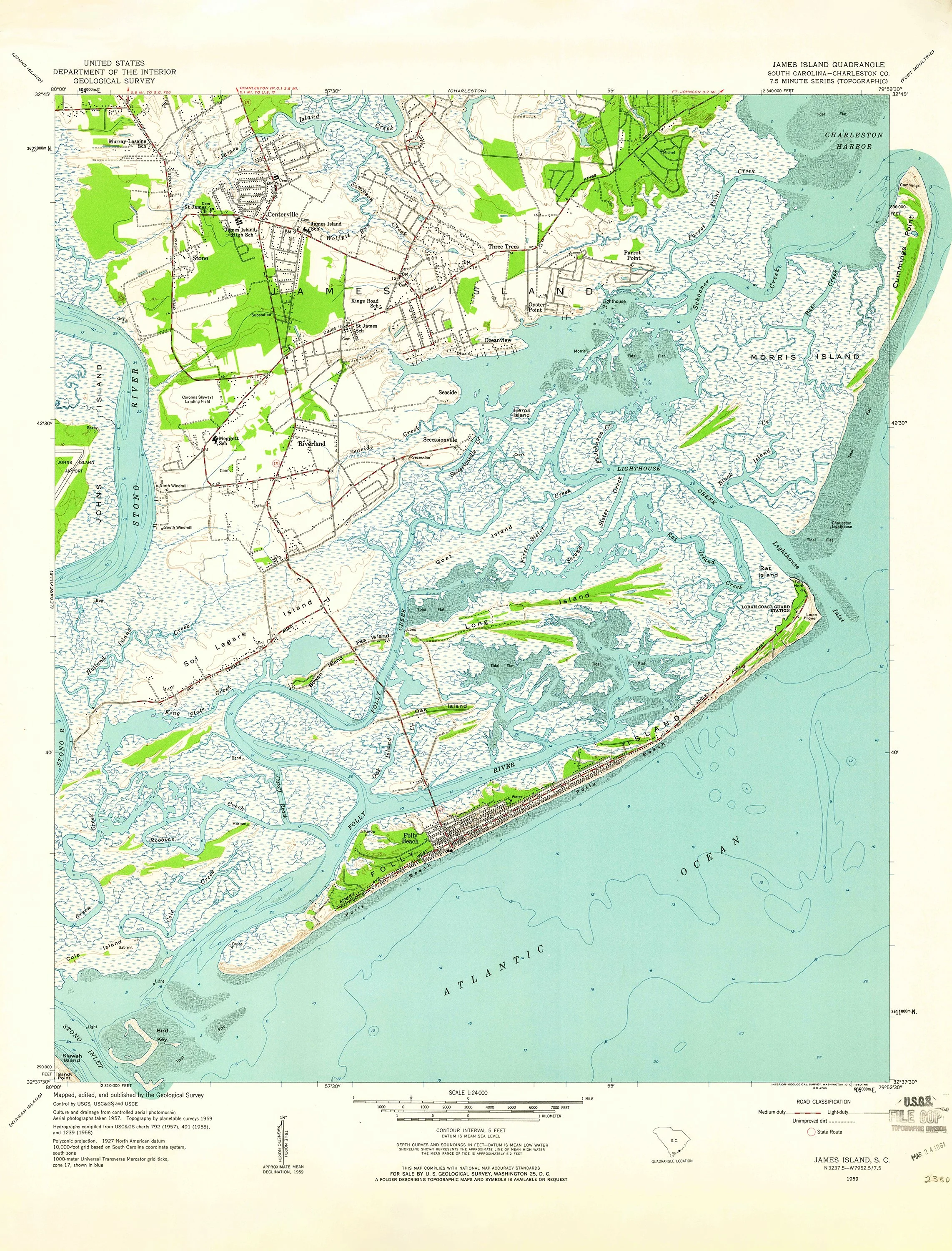
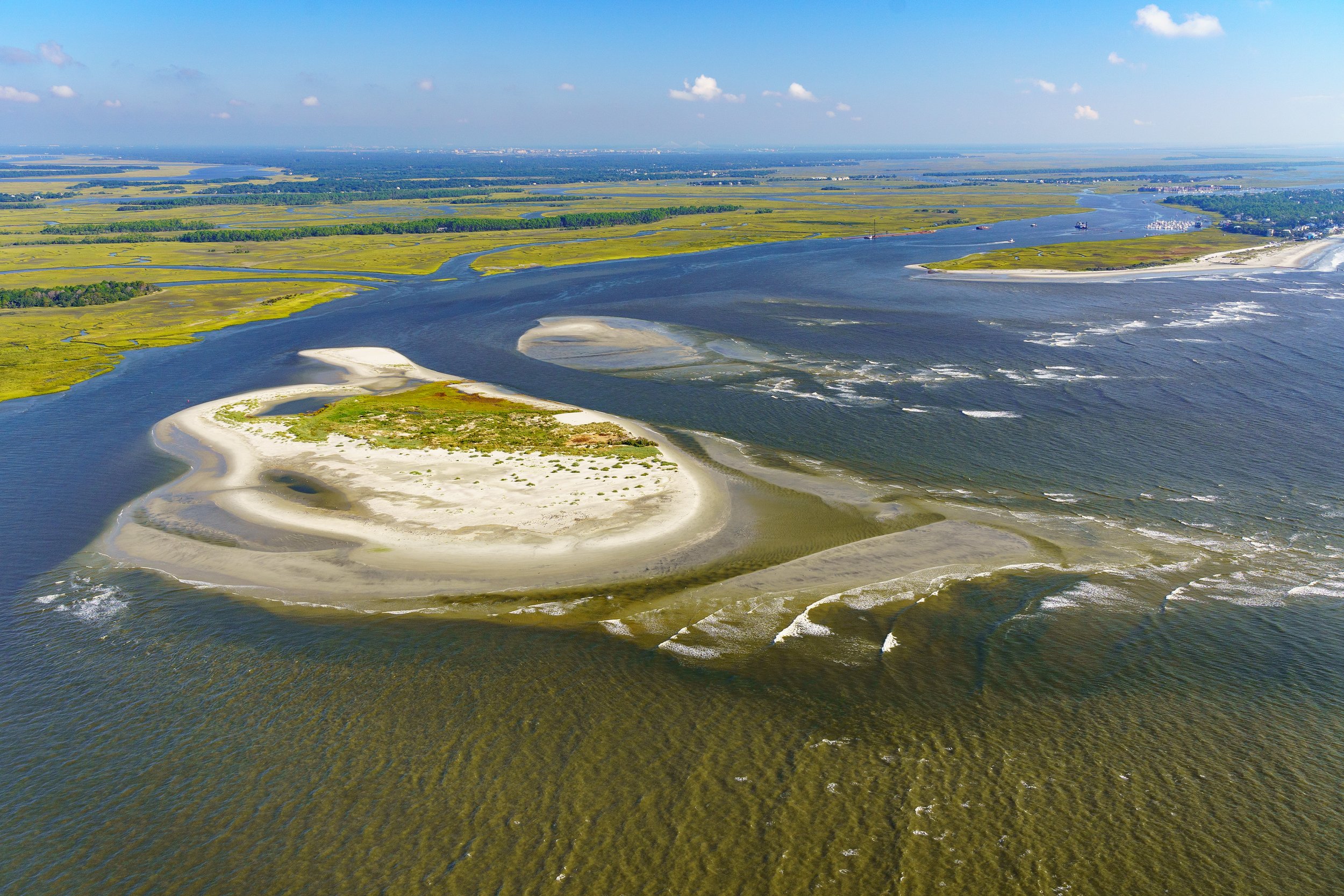
The exact size of Bird Key (approximately 35 acres) varies from year to year due to the ephemeral nature of ever-shifting sands. Regardless, the island continuously shows up as a a successful breeding ground for a number of birds, thanks to protections.
“From the 1980s through 1994, Bird Key hosted the largest number of nesting brown pelicans in the birds’ range.
Though the species was thriving in 1989 with 7,739 nesting pairs noted in South Carolina that year, by 2002 fewer than half that number of nesting pairs could be counted in the state; only 3,001 were documented. In 2004, brown pelicans disappeared from Bird Key altogether, not to return until 2014. That year, 200 brown pelican nests were counted on the island; one year later, 1,299 nesting pairs were counted at Bird Key. In 2015, biologists documented 5,210 brown pelican nests in South Carolina, indicating that the protections afforded by seabird sanctuaries are indeed helping revive the population.”